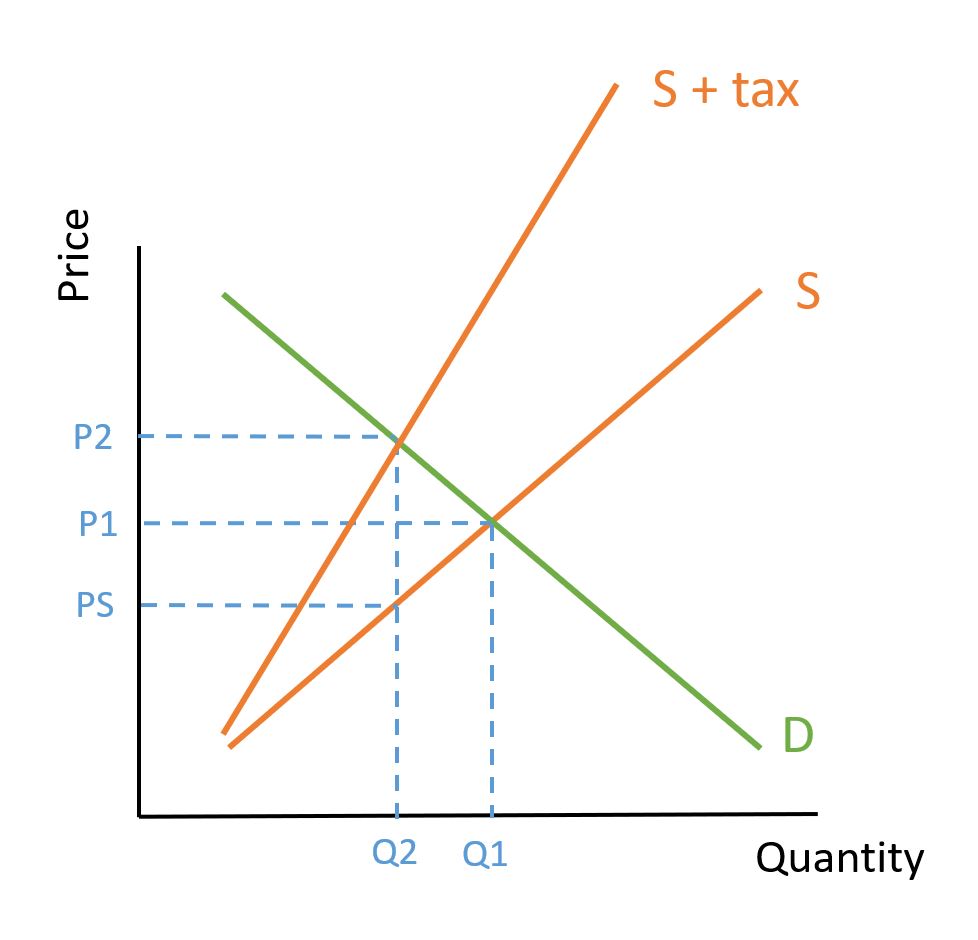
Producers and consumers only consider their private costs and benefits. The negative externality creates a social cost, so too much of the good is produced/consumed.
One person consuming the good does not stop another person consuming it.
-Ensures sellers make enough for their product (e.g. low-income farmers in Thailand have stable income)
-Could help solve poverty (e.g. minimum wage).
-Adverse weather makes the good scarce (shift left)
-Favourable weather makes the good plentiful (shift right)
-A monopoly producer decides to put more on the market (e.g. Saudi Arabia)
-Creates a market incentive for innovation to cut carbon.
-Efficient because it is cost effective: carbon emissions can be cut by the firms who have the cheapest costs.
The excess supply (or ‘glut’) that results is wasteful (e.g. Thai government’s spending on the ‘rice mountain’)
Any of the following:
-Government Inefficiency (Distorted price signals, Lack of Incentives, Political Interference, Inadequate Information)
-Unintended consequences
-Moral Hazard
-Regulatory Capture
A tax on a product at the rate of its price.
When intervention to reduce risk-taking behaviour encourages the risk-taking behaviour it is meant to prevent.
e.g. A policy of bailing out failing banks means banks take more risks, increasing the likelihood they will need bailing out.
Pmin is higher than equilibrium price.
This means there is Excess Supply at Pmin, causing a 'glut'.
Qs products are produced, but only Qd products are purchased by consumers.